
You may have heard me speak in my videos or lessons about not pushing when we sing. In fact, I find myself saying it all the time! In Bel Canto we never – ever – force our voices, but we instead learn how to spin sound (and air) within us. Once you know how to do this – and keep at it – I promise that you will never look back in your singing. Bel Canto can be addictive like that!
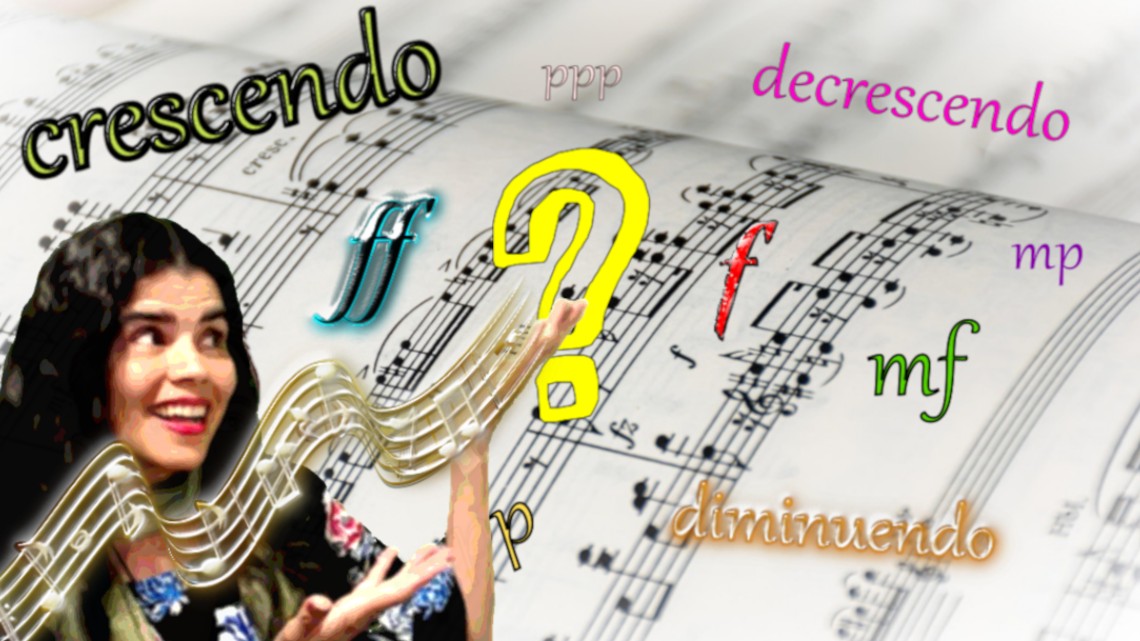
Generally, dynamics in music and singing refers to how quiet or loud music is, as indicated by dynamic markings on sheet music – such as pianississimo (ppp), fortississimo (fff), crescendo (<), decrescendo/diminuendo (>) and others. If you do not use sheet music with music notation or such markings for your singing, it is still worth understanding how dynamics work so your songs are sung the way the composer intended.
Dynamics help singers "sustain variety and interest in a musical performance [to] communicate a particular emotional state or feeling" – Dynamics (music) - Wikipedia
In my singing experience, dynamics becomes even easier to navigate with Bel Canto training, as long as we prepare the mind and body, remain supported (in the core/torso, ribcage), and work on open, sustained, inner stability. We come to realise that our sound is always within us, and we can control (but not micromanage) our dynamics by relying on strong, open, aligned internal structure. We can also definitely use our brains (thoughts) to apply dynamics to our songs according to our best interpretation.
But what if we do not need to use the full range of dynamics available to us, for example, when it comes to music and songs that require high-level, vigorous singing for most of the time, such as in pop or rock music? Is there room for softer singing? Is it relevant?
Regardless of which genre you specialise in, I believe that it comes down to the actual song. As a singer you want to tell a story through the lyrics. Dynamics will help you do this. It is unlikely that all songs need to be sung with force one hundred percent of the time from start to finish. You also do not want to blast your singing and hurt your voice in the process.
What is the song’s context? What is the message? Try to find out more about the song’s backstory. If you have the sheet music what markings are there or what did the composer intend when he or she wrote it? It is good musicianship and all-round best singing practice for effective song delivery to dig deeper into your songs.
In my opinion and experience, avoiding dynamics would be like singing in an emotionless, robotic manner, removing genuine human expression, connection, emotion, and artistry. Most people would not want that in a performance – in fact it sounds like a dreary performance to me! Like any acoustic, naturally resonating instrument, we need the freedom to play with our sound to convey the song’s true meaning and message. Use dynamics for that!
Look at your songs, identify dynamic markings, circle them and make brief notes on your music if that helps. Remember what dynamics – singing with emotion and intention – means in your mind, body, and soul. Feel it, because your audience will.
If you would like to hear a song that specifically addresses how to sing dynamics in a delightfully fun way, watch the video below to listen to my arrangement of an original piece written around the 1870s!
VIDEO: "A Song of Dynamics" by Theodore F. Seward - Arranged & Sung by Yvonne
I warmly invite you to come and learn with me to experience the magic of Bel Canto in your voice. A Free Discovery Consultation is also available if you prefer an informal chat first – don’t hesitate to reach out!
Until next time, always remember to...
Be Free To Sing,


 Be Free To Sing is a proud member of the Australian National Association of Teachers of Singing (ANATS) Limited.